How Focchi Achieved 23% CO2 Reduction with a Multimodal Transport Strategy
An interview with: Lucia Bartoli - Sourcing & Procurement & Eleonora Tonelli - Quality & HSE, Focchi
About Focchi
Focchi is a leading provider of bespoke façade solutions within the building and construction industry. The
company is strongly committed to sustainability and is actively working towards achieving net-zero buildings by
2030.
As part of this ambition, Focchi takes a holistic approach to sustainability, considering product design, material
selection and overall building performance throughout the full lifecycle. However, logistics remains a key area of impact, particularly outbound transport, which represents a significant share of its carbon footprint
A multimodal solution tailored to construction logistics
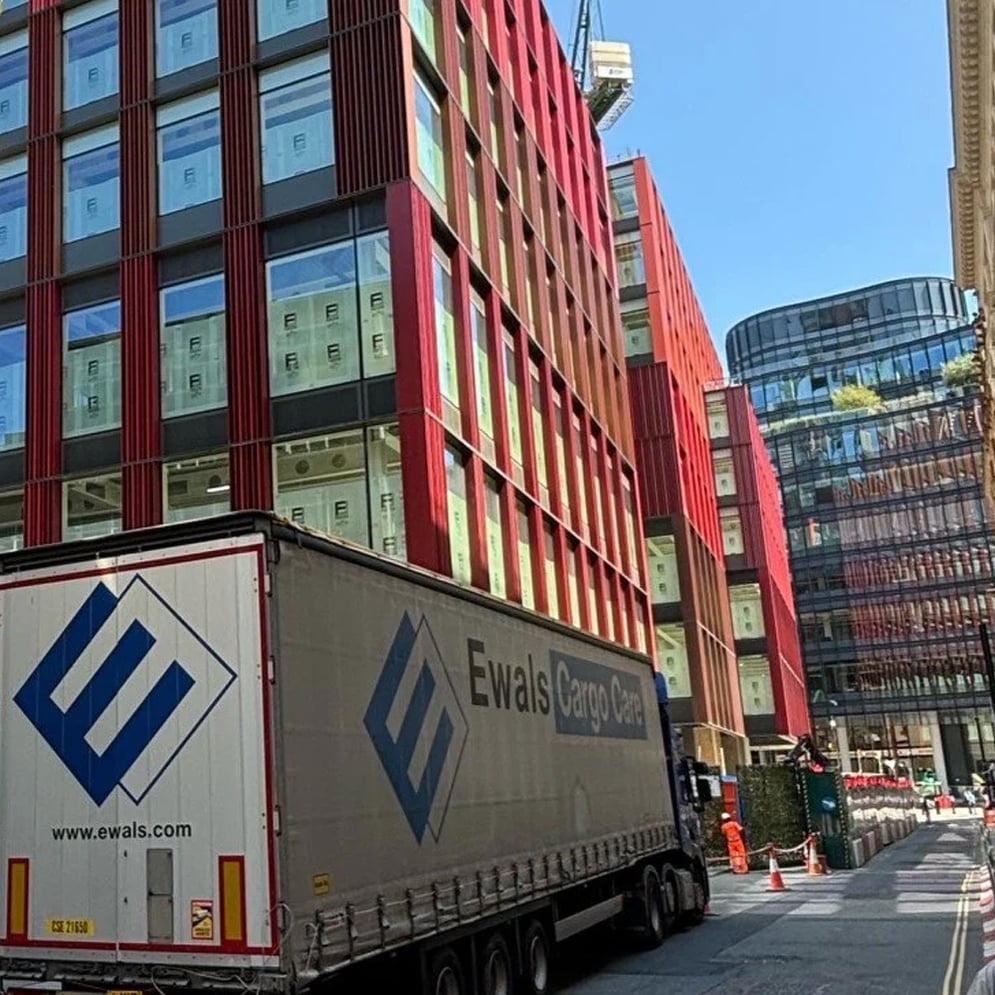
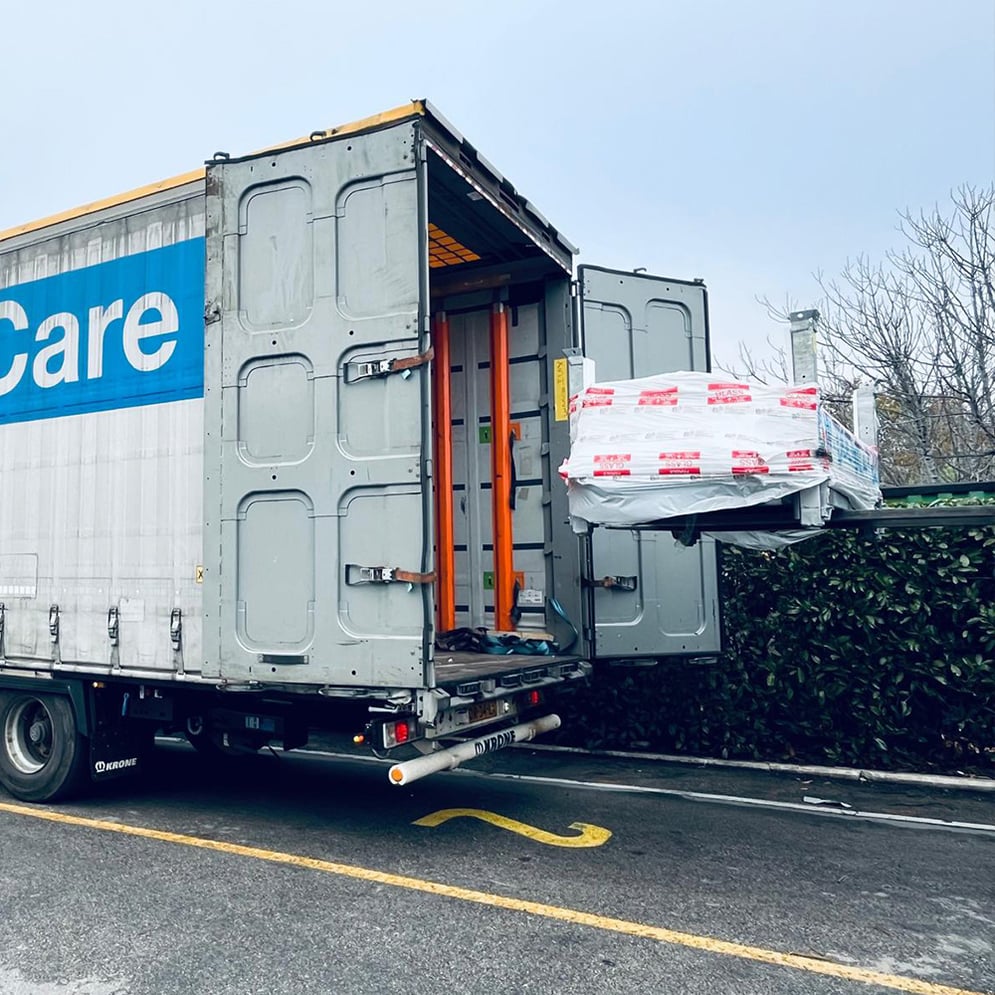
To address these challenges, Ewals Cargo Care worked closely with Focchi to implement a multimodal transport strategy combining rail, short-sea, and road transport. This approach reduced reliance on road transport while maintaining flexibility and performance across the supply chain. Key elements of the solution included:
-
rail and short-sea transport, enabling lower-emission long-distance transport;
-
road connections, ensuring flexible and reliable last-mile delivery;
-
Mega Trailers with top and side loading, supporting efficient transport of non-standard cargo;
-
certified drivers and compliant equipment, meeting UK requirements for urban construction sites.
A crucial element was proactive contingency planning. While multimodal transport introduces additional complexity, Ewals Cargo Care ensured disruptions were managed effectively to maintain delivery reliability.
“Initially, we were hesitant about contingency planning for a multimodal network. However, in the event of disruptions in the multimodal network, ECC is very proactive and has a significant impact on resolving the issue. Now, we are more positive about the punctuality and the affordability of the multimodal delivery.” -Eleonora Tonelli
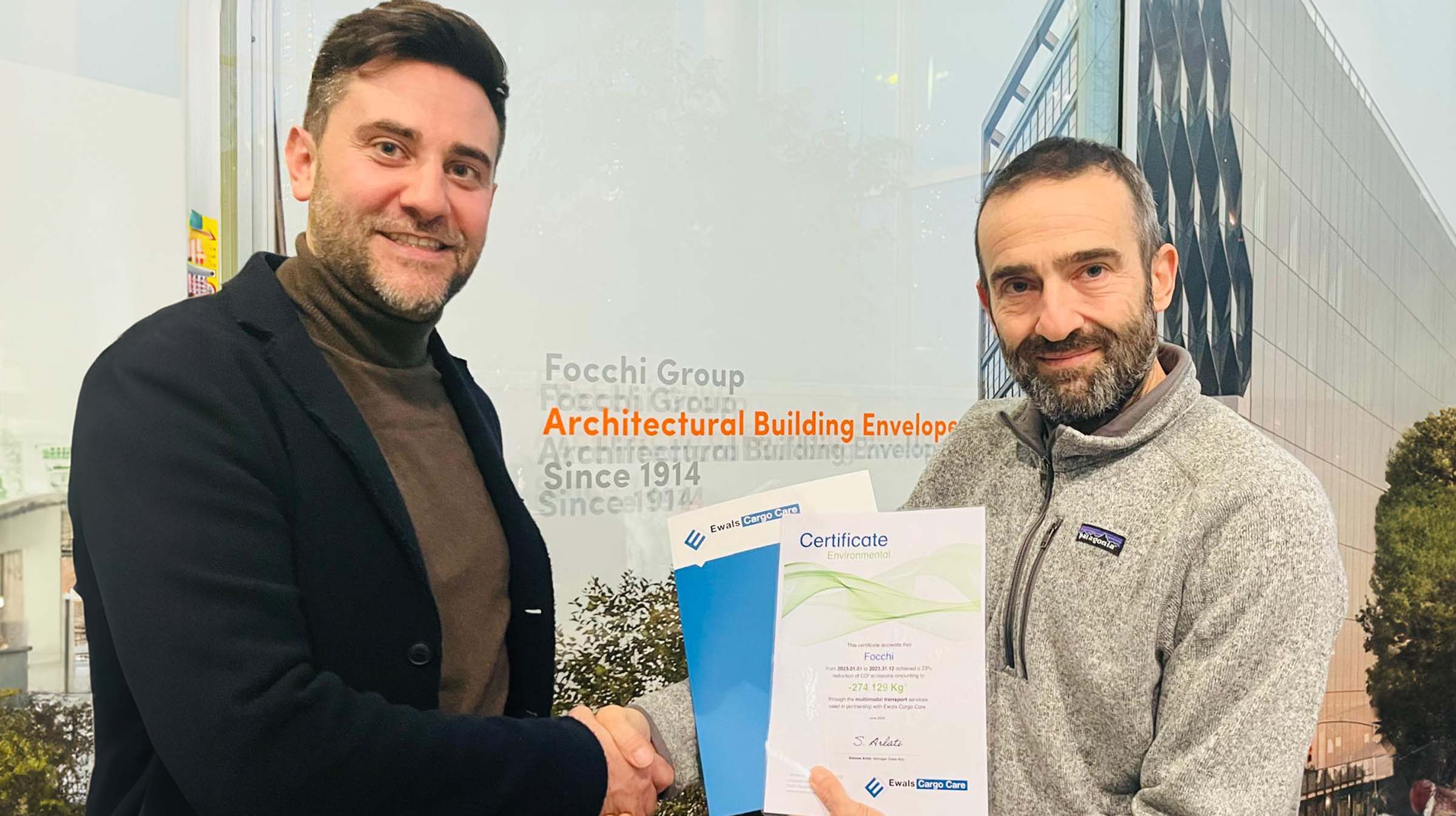
Picture: Francesco Berto (Focchi) receives the CO2 reduction certificate from Simone Arlati (Ewals Cargo Care)
Focchi, Italy
Working together to continuously improve sustainability
The collaboration between Focchi and Ewals Cargo Care goes beyond operational execution. It is built on a shared commitment to improving sustainability, performance and efficiency over time.
The partnership focuses on:
-
continuous optimisation of transport flows and modal mix;
-
exploring alternative fuels and future-proof solutions, such as HVO;
-
improving resource utilisation across the network, including return flows;
-
maintaining close communication to quickly resolve operational issues.
“Focchi focuses on its sustainability impact. The indirect impact is more challenging to control than direct CO2 emissions. The outbound logistics is the second hotspot for our emissions. Therefore, we focus on multimodal transportation, especially when railway and sea transportation are available. Further, we are also investigating green fuels, such as HVO fuel.” -Eleonora Tonelli
This collaborative approach ensures that improvements are not one-off initiatives, but part of an ongoing journey towards more sustainable logistics.
Measurable impacton emissions and operational performance
23% CO2 reduction in outbound logistics
The multimodal transport strategy has delivered clear, measurable results for Focchi, supporting both sustainability and operational performance.
Key results:
-
23% reduction in CO₂ emissions across outbound logistics in 2023;
-
274,129 kg of CO₂ saved compared to road-only transport;
-
consistent on-time delivery performance, supporting construction schedules;
-
efficient transport of non-standard cargo, using specialised trailers;
-
improved resource efficiency, including reduced empty kilometres;
-
high service quality, supported by fast and effective issue resolution.
“on-time deliveries are very important in our industry, since each piece of the building needs to be installed in a certain week. Multimodal transport is slower, but with some good planning, a longer delivery time is not an issue.” -Eleonora Tonelli
“We are satisfied with the service. Even if problems occur, the collaboration between people is excellent, so everything is quickly solved.” -Eleonora Tonelli
Conclusion
Ewals Cargo Care’s expertise in sustainable logistics solutions and unwavering commitment to exceptional service have positioned them as a vital partner for Focchi. This case study exemplifies the power of collaboration in achieving ambitious sustainability goals within the construction industry. By choosing ECC, Focchi has secured a strategic partnership that propels them towards a sustainable future. Together, ECC and Focchi are paving the way for a more sustainable building industry.
“The main benefit of ECC is multimodal transport and its CO₂ reduction. Besides that, the service is very good and we are satisfied with it.”
Let's connect

More customer cases