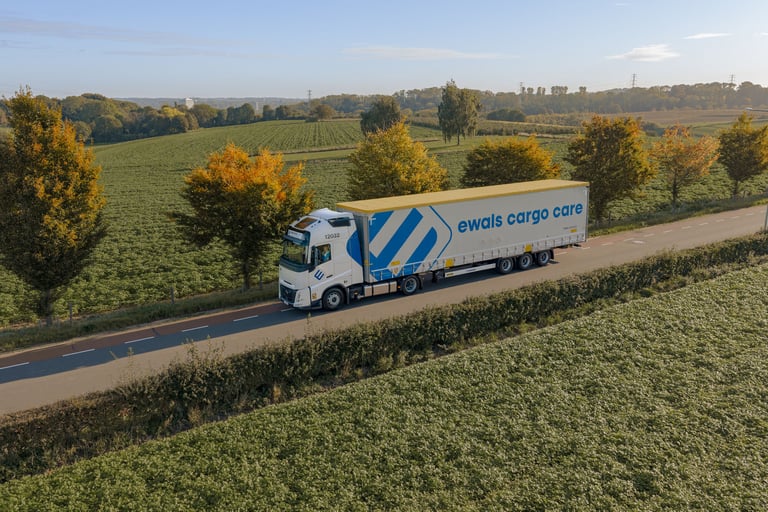
The year 2026 will bring another wave of toll rate adjustments, expansion of toll sections, and a gradual transition to kilometer-based tolling for carriers across Europe. The changes will affect both traditional toll countries and countries that are introducing new systems or responding to European legislation on CO₂ classes.
The Netherlands
The rate will depend directly on the vehicle's CO₂ emission class, with the expected average rate being around EUR 0.20 per kilometer. This step is seen as one of the most significant shifts towards emission-differentiated road transport charging in Europe.
Czech Republic
From 1 January 2026, a new toll tariff based on an update to Government Regulation No. 240/2014 Coll. came into force. Toll rates will increase by an average of 2.86 %, with CO₂ emission classes playing a more significant role. At the same time, the toll road network is being further expanded, particularly on first-class roads, which will affect a number of domestic and international transport operations.
Austria
From the beginning of 2026, tolls will increase by an average of approximately 10 %. The Austrian network has long been one of the most expensive in Europe, and the further increase will have a significant impact, particularly on transit traffic through the Alpine region.
Belgium
In Wallonia, rates are regularly indexed according to the consumer price index, which means an increase in tolls of around 1.9 % in 2026. In Flanders and Brussels, on the other hand, the focus is primarily on environmentally friendly vehicles, for which new rates will be introduced specifically for zero-emission vehicles.
Greece
Here, tolls are increasing by 2-5 %, depending on the specific section and type of road.
Hungary
Since January 2026, rates on motorways and main roads have increased by 4.3 %, but from March onwards there will be a very significant jump in rates on main roads, in some cases by up to 35 %. In the middle of the year, Hungary plans to further expand the toll road network, which will increase the overall scope of the toll system in the country.
Ireland
The toll increase will be approximately 2 %. Here, too, this is primarily a response to rising infrastructure costs and an effort to pass some of these costs on to road users.
Italy
Tolls are increasing by an average of 1.5 % across the entire network, with some busy sections seeing specific increases. This applies, for example, to the Salerno–Pompei–Napoli route and the Brenner Pass, which is key for international freight transport between northern and southern Europe.
Poland
The toll road network will be expanded by approximately 650 kilometers. At the same time, a gradual but very significant increase in rates is planned, with a 4 - 6.5 % increase in January followed by another jump of up to 40 % in February.
The year 2026 therefore confirms the long-term trend whereby tolls are becoming not only a tool for financing infrastructure, but also are gulatory mechanism promoting more environmentally friendly forms of transport. For carriers, this means the need to actively work on route optimization, fleet structure, and the choice of transport solutions. At Ewals Cargo Care, we are continuously monitoring these changes and helping our customers find ways to cope with the new conditions efficiently, sustainably, and without compromising on service quality.